November 14, 2025 • 6 min
Why Muscle Mass Is the Key to Healthy Aging
If you're a woman in your mid 30s or beyond, you may have noticed something: the workouts that used to keep you feeling strong do not feel the same any more.
You might be doing lots of walking, running, cycling, or follow-along home workouts, but your shoulders feel tighter, your knees complain more easily, and it is harder to keep your shape even when you are trying. That is not you “failing”. That is your muscle mass quietly changing.
This is why, after many years of karate, running, and mostly bodyweight training, I slowly shifted Joy2Move toward more strength-focused, dumbbell-based, no-talking workouts. Muscle is not just about “toning up”. For women, especially after 35, muscle is health.
Strength sessions per week
2–3 home workouts
Typical session length
30–60 minutes
Best tools
Mat + kettlebell or a pair of dumbbells
Muscle in one sentence
Strong muscles act like a wearable health shield, helping you move better, burn more energy, and stay independent as you age.
What happens to muscle as we age
From around your 30s, if you are not doing regular strength training, your body gradually starts to trade muscle for fat. You may weigh the same on the scale, but you feel softer, weaker, and more tired after effort.
This age related muscle loss has a name: sarcopenia. It is linked with frailty, lower quality of life, and a higher risk of falls and chronic disease later in life. A 2025 consensus report from the Global Leadership Initiative in Sarcopenia (GLIS) found that sarcopenia is significantly associated with reduced quality of life, a higher risk of falls and fractures, and a higher risk of mortality (Beaudart et al., 2025).
For women there is an extra twist. Around peri-menopause and menopause, shifting hormones speed up this loss of muscle and bone. You might notice everyday things getting harder:
- Carrying shopping bags or kids up the stairs
- Lifting your luggage into the car or overhead
- Getting up from the floor or a low sofa
In other words, losing muscle does not just change how you look. It changes how you live. The good news is that sarcopenia is not a one way road. Strength training and at home fitness focused on muscle can slow it down or even reverse some of the loss, especially if you start before the problem becomes severe.
Why muscle mass matters for women’s health
You have probably heard that “muscle burns more calories than fat”. That is true, but for women over 35 there are deeper reasons to care about muscle.
1. You protect your bones and joints
When you lift weights or do loaded full body movements, your muscles gently pull on your bones. That signal tells your body to keep those bones dense and strong.
For women going through peri-menopause and beyond, this is one of the simplest ways to look after your hips, spine, and wrists. Strong muscles also act like natural braces around your joints, so your knees, ankles, and lower back feel more supported in daily life.
2. You keep your metabolism more friendly
Muscle is like an engine that runs all day, not just during your workout. The more muscle you carry, the more energy your body uses even when you are resting on the sofa.
That means your body handles blood sugar more smoothly, and you can usually enjoy food with less “all or nothing” dieting. For many women, a few regular strength based home workouts change how their clothes fit even if the scale barely moves.
3. You help your heart and long term health
Stronger muscles are not just about looking athletic. Research shows that people who regularly do muscle strengthening activities have a lower risk of dying from all causes, including heart disease. For women, just two short strength sessions per week can make a real difference. A large 2024 study in older adults found that doing any amount of weight training was linked with a lower risk of death from all causes, heart disease, and cancer, with even bigger benefits seen in women: Weight training and risk of all-cause, cardiovascular disease and cancer mortality among older adults
Why I started adding more weights to Joy2Move
When I first created Joy2Move, most of my training life had been a mix of karate, lots of running, and simple bodyweight sessions. That gave me great endurance and willpower, but as I moved through my 30s I noticed my upper back and hips felt tighter after long days, and small aches after trail runs stayed longer than before.
At the same time, I was learning how quickly women can lose strength and bone density after 35, especially when life gets busy and stress is high. So I started adding more dumbbells to my own training, then to the videos: squats, hinges, rows, and presses with weights, done in a calm, no-talking, follow-along format at home.
Very quickly I felt the difference. My posture improved, running hills felt easier, and my joints felt supported instead of stressed. That is why you now see more strength focused sessions in the Joy2Move app.
How much strength training do you really need?
You do not need to live in the gym or lift huge weights. For most women using at home fitness, a simple plan is enough:
- 2–3 days per week of full body strength training
- 30–60 minutes per session
- Focus on big movements: squats, hinges, pushes, pulls, and carries
If you are just starting, begin with two days. Once that feels normal, you can add a third day or make one of your home workouts a bit heavier.
A simple weekly target
2–3 strength days and daily light movement like walking, easy cycling, or mobility. Anything more is a bonus, not a rule.
Remember: the goal is not perfection. The goal is to give your muscles a clear, repeated signal that says, “stay, grow, be useful”.
Two at home strength workouts to start with
If you want to build or keep muscle at home without any talking, these two follow-along workouts from the Joy2Move app are a solid place to start.
1. Back sculpting and posture support
If your upper back, shoulders, and posture are your main concern, start here.
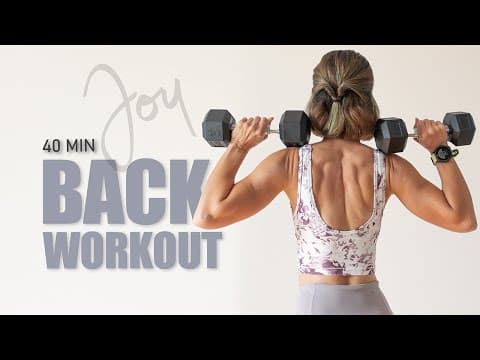
40 Min BACK Sculpting Workout with Dumbbells | At Home Strength Routine for Better Posture
A 40 minute dumbbell session focused on your upper back, shoulders, and posture. You move through three sets of targeted exercises that help you build strength and definition.
The routine starts with a short warm up, continues with controlled back focused sets, and finishes with a cooldown so you leave the mat feeling tall instead of tight. I use two sets of dumbbells in this follow along workout, but you can join with whatever weights you have at home.
2. Full body strength and mobility
When you want one workout that trains everything in one go, this longer session is for you.
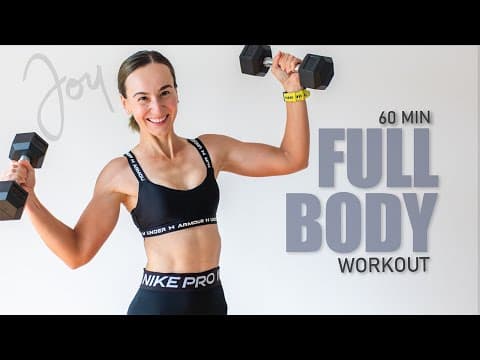
60Min FULL BODY Workout | STRENGTH and FUNCTIONAL MOBILITY
A 60 minute full body dumbbell routine that blends strength training with functional mobility, so you finish feeling both worked and open, not stiff.
After a warm up, you move through compound patterns for legs, glutes, core, and upper body, then ease into a short cooldown to help your joints stay happy. You can adjust the weight to your level and still get all the benefits by focusing on smooth, controlled reps.
The main point
Muscle is not a “nice to have” extra for women. It is one of your most important health assets.
You do not need a gym membership, fancy machines, or perfect discipline. With a kettlebell or a pair of dumbbells, some space in your living room, and consistent follow-along home workouts, you can:
- Protect your bones and joints
- Support your heart and metabolism
- Stay strong, independent, and ready for the life you want
Start small, stay patient, and let your muscle work for you, now and for many years to come.
If you liked this article, here's my next recommendation